

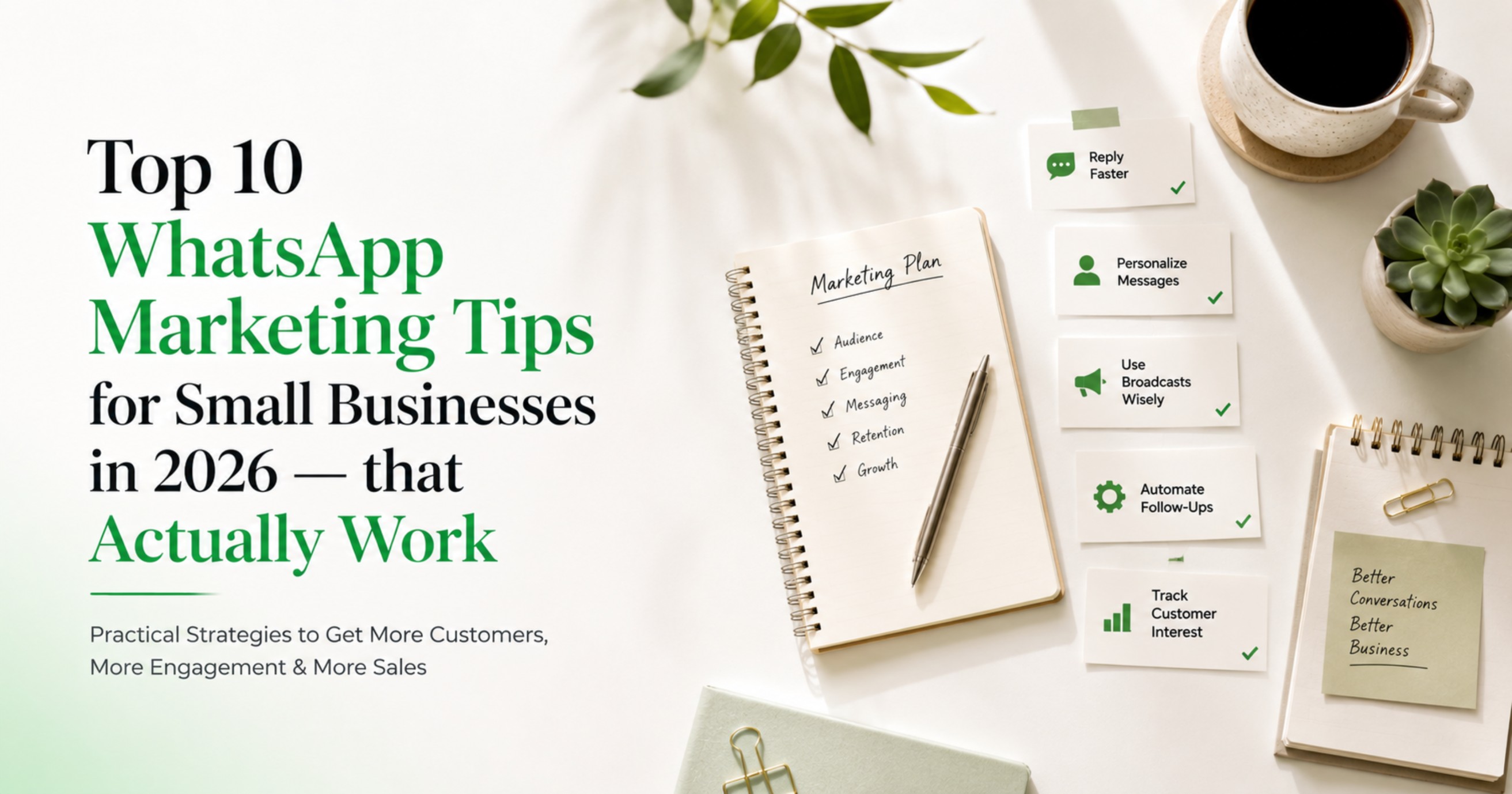
A lot of business owners know that WhatsApp marketing is important. But most of them are doing it wrong. They send random messages whenever they feel like it. They use the same boring text every time. They never reply fast enough. And then they wonder why it is not working.
The truth is — WhatsApp marketing done right can completely change how fast your business grows. Done wrong, it just annoys your customers and wastes your time. Here are 10 tips that actually work in 2026, with real examples so you can start using them right away.
The 10 tips
This is the most important rule and most businesses ignore it. Never add random numbers to your WhatsApp list. Always make sure the customer has said yes to receiving your messages — either on your website, in your shop, or when they place an order. When people expect your messages, they welcome them. When they do not, they block you. And too many blocks will get your number banned permanently.
Many small business owners try to send bulk messages from the regular WhatsApp app. This is a big mistake. WhatsApp detects this and bans your number very quickly. The official WhatsApp Business API, available through platforms like Chatieons.com, lets you send thousands of messages safely and legally. It also gives you features like auto reply, analytics, and team inbox that the regular app does not have.
Nobody likes a message that feels like it was sent to a thousand people. Even if it was. A simple trick is to add the customer's first name at the start of every message. Instead of "Hello, we have a new offer for you" — say "Hello Rahul, we have a new offer just for you." This tiny change makes the message feel personal. With WhatsApp marketing tools, you can do this automatically for every customer on your list without typing each name manually.
Timing matters a lot on WhatsApp. The best times to send marketing messages are between 10 AM and 12 PM, or between 6 PM and 9 PM. These are the times when people are most likely to be on their phones and in a relaxed mood. Avoid sending messages very early in the morning or late at night — customers find it irritating and may block you. Also avoid sending messages on Monday mornings when people are busy starting their work week.
One of the biggest mistakes businesses make is sending too many messages. If you message your customers every day, they will get annoyed and either block you or ignore you completely. A good rule of thumb is to send a maximum of one or two messages per week. Make each message count. Ask yourself — is this message giving the customer real value? If the answer is no, do not send it.
A plain text message is easy to ignore. But a clear product photo or a short 30 second video gets attention immediately. If you are a clothing shop, send a photo of your new collection. If you run a restaurant, send a short video of your special dish. If you sell electronics, send an image of the product with the price. Visual content gets 3 times more engagement than text alone on WhatsApp. Keep videos short and make sure they load fast.
Customers expect fast replies. If someone messages you at 9 PM asking about your product and you reply the next morning, they have probably already bought from someone else. Set up an automatic reply that goes out instantly whenever a customer messages you — even at night or on weekends. A simple message like "Hi, thanks for reaching out. We will reply within a few hours. Meanwhile here is our product list — [link]" is enough to keep the customer engaged and waiting.
Every WhatsApp message you send should tell the customer exactly what to do next. Do not just say "We have a new collection." Say "We have a new collection — reply YES to see the full catalogue" or "Click the link below to shop now." A clear next step makes it easy for the customer to take action. Without it, most people will just read the message and move on without doing anything.
Not all your customers are the same. A customer who bought from you last week is different from one who has not purchased in six months. A customer who buys premium products is different from one who always looks for discounts. Divide your customer list into groups and send messages that are relevant to each group. New customers get a welcome message. Old customers get a "we miss you" offer. Regular buyers get early access to new products. This kind of targeting gets much better results than sending the same message to everyone.
WhatsApp marketing is not a set and forget thing. After every campaign, check how many people opened the message, how many replied, and how many actually bought something. If one type of message is getting more replies, send more messages like that. If something is not working, change it. Platforms like Chatieons.com give you detailed analytics so you can see exactly what is working and what is not. The businesses that grow the fastest are the ones that keep testing and improving.
Quick summary
Get permission first. Use the official API. Personalise every message. Message at the right time. Do not overdo it. Use images and videos. Set up auto reply. Always have a call to action. Target different customer groups differently. And always track your results. Follow these 10 tips consistently and WhatsApp will become one of the best tools in your business in 2026.